


For decades, hotel accessibility has mostly meant physical adaptations – ramps, accessible lifts, adapted bathrooms, or specific signage have all contributed to an inclusive hotel environment. While these features are still essential, for today’s traveller, they’re only part of the picture.
The context is shifting at its core. With an ageing population, the rise of digital booking, and increased awareness (and legislation) around disability rights, guest expectations have evolved. For many, a lack of hotel accessibility isn’t something they encounter in the room – it happens much earlier.
Often, challenges with accessible hotels arise not in the hotel room itself, but well before a guest even arrives. Issues occur when information isn’t clear enough, when answers don’t confirm essential details, or when the only option to resolve questions is to make a phone call – something not every traveller can or wants to do.
In this context, accessible communication in hotels is no longer a nice-to-have. It’s become an invisible, yet vital, infrastructure – one that enables conversation, clarification and trust throughout every stage of the guest journey.
That’s why hotel accessibility today can’t just be about physical spaces. While step-free access and accessible bathrooms make a difference upon arrival, accessible digital communication gives guests the confidence to book their stay in the first place.
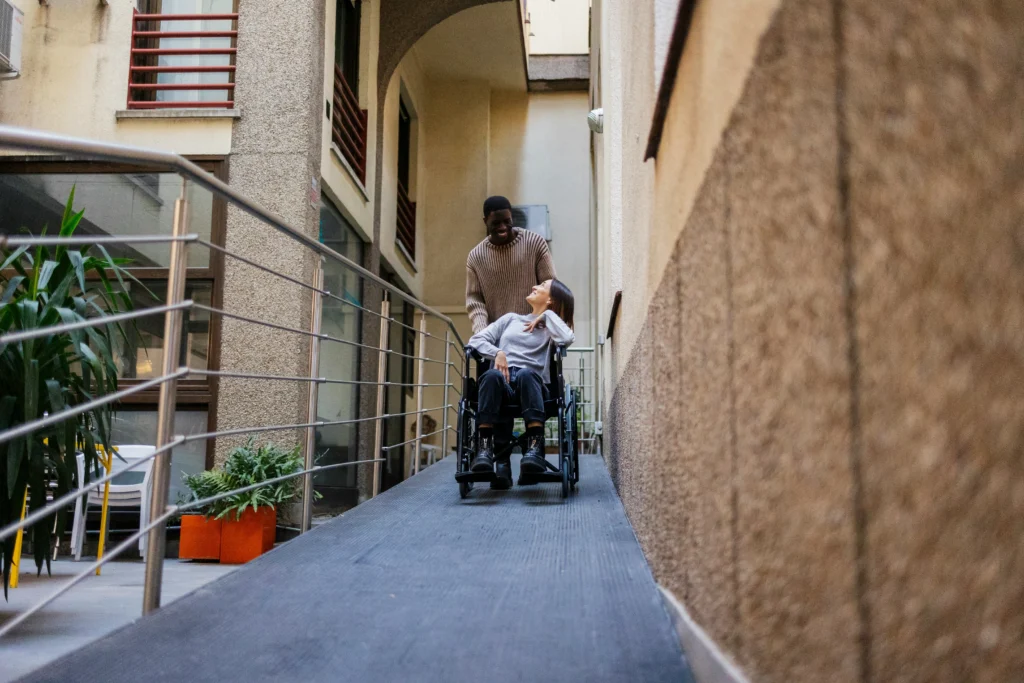
Europe faces a decisive demographic and legislative transformation directly impacting the hotel sector.
Let’s look at a few key figures:
The regulatory landscape is also evolving. The European Accessibility Act is raising the bar, steadily expanding requirements for digital accessibility in services, platforms and guest-facing information. While it’s not just aimed at businesses with accessible hotel rooms, it has very real consequences for how hotels communicate their services, share information, and support guests at every point before, during and after their stay.
Hotel accessibility in Europe is now much more than an architectural concern. It’s a strategic challenge that demands clear processes, the right technology, and a consistent approach to communication over time. To better understand these challenges, let’s explore common pitfalls in hospitality.
Most issues relating to hotel accessibility don’t start in the guest room. They originate in the pre-arrival information, or in the way information is passed among staff and departments.
A hotel might have excellent physical facilities, but still create barriers if guests can’t confirm how those solutions will work for their individual needs. Accessible hotels fail when guests are forced to guess, interpret or make assumptions.
Common, overlooked pitfalls for hotels:
Solutions to improve hotel accessibility must be driven by processes that ensure information is aligned and reliable. As a hotel tech example, HiJiffy’s solution makes it possible for hotels to organise Property and Company Documents so that the essentials are always accurate and available across channels: website, social media, OTAs, WhatsApp, Telegram and SMS.
Today’s hotel accessibility stands on two interlinked pillars: physical adaptations and digital, communication-led access. Both matter. Both work hand-in-hand.
| Dimension | Physical Accessibility | Digital and Communication Accessibility |
|---|---|---|
| Barrier removed | Visible, structural barriers | Information, cognitive and communication barriers |
| Critical moment | During the stay | Before, during and after the stay |
| Main risk | Limiting use of the space | Guests not booking or cancelling the reservation |
| Decision point | On arrival at the hotel | During search and planning |
| Direct impact on booking | Indirect | Direct and measurable |
| Operational requirements | Infrastructure, design, maintenance | Processes, technology, internal coordination |
| Correction cost | High and slow | Medium to high, but more flexible |
| Value to the guest | Ability to use facilities independently | Confidence to decide to travel |
A hotel can have accessible rooms, but it’s not truly accessible if guests can’t easily confirm essential details before they leave home. In practice, digital hotel accessibility is the front door – it’s what determines if guests will even experience your physical environment.
Travellers with specific needs want three things first: precise information, accessible written communication and consistency at every touchpoint. They aren’t looking for special treatment – just the confidence to plan their holiday with no unwelcome surprises.
Messaging for hotels is now a natural inclusion tool. Written, clear, and not dependent on calls, it allows guests to proactively raise their needs. For guests with access needs, communication isn’t just a service; it’s a way to be confident about the comfort and safety of their stay.
Understanding the entire guest journey and how each phase can help or hinder those with accessibility needs is key to designing practical improvements.
How hotels structure and communicate their accessible services shapes the whole guest journey. Every stage is a fresh opportunity to break down barriers.
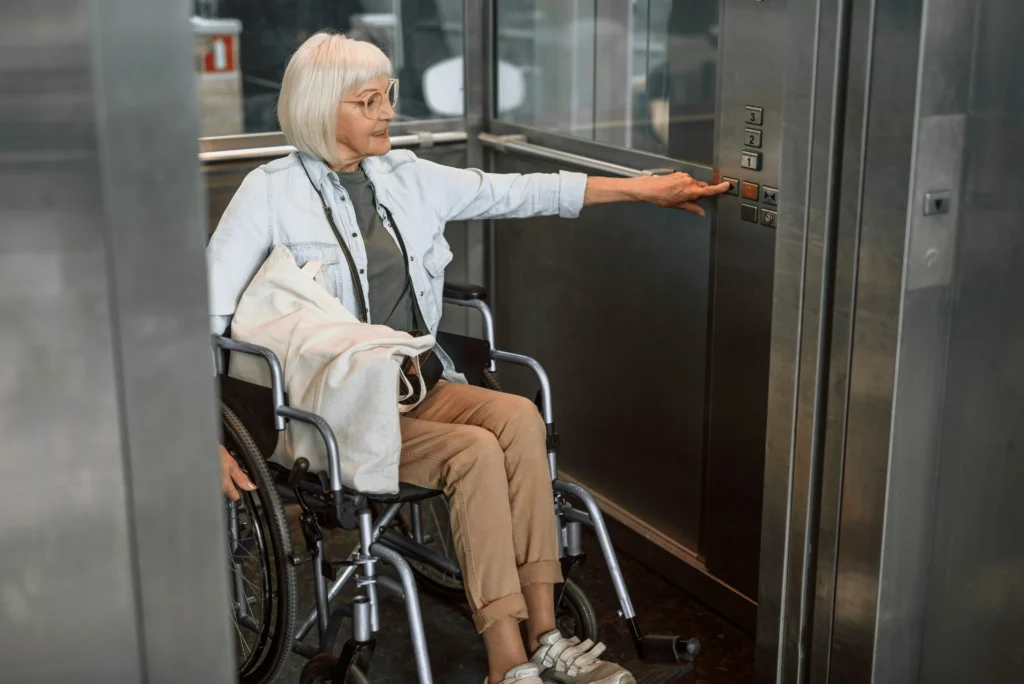
Accessibility in hotels isn’t a one-off event. It’s built step-by-step. Guests are judging the hotel’s accessibility long before they walk into their room, and that evaluation continues through check-out. That’s why every stage of the journey brings real implications.
This phase holds the most critical decision points when it comes to accessibility. The guest hasn’t travelled yet, but is already measuring if the journey is practical, if they’ll be able to retain autonomy, and if the hotel staff will really understand and support their specific needs. Here, hotel accessibility is about anticipated risk.
Communication has two jobs: let the guest make an informed choice, and allow staff to prepare in advance and eliminate or reduce friction. For accessible hotels, this means integrating accessibility information across all their usual marketing and booking channels – not just as a niche sidebar topic.
At this stage, quick, clear, written channels are vital. A web-based booking assistant or chat on any device allows guests to clarify the details of accessible hotel rooms, confirm needs and book in confidence, without phone calls or swapping platform.
Clear, verifiable information that hotels should share:
This stage also matters for identifying qualified leads. A question about hotel accessibility is a clear sign of intent to book. Capturing that enquiry prevents the guest from having to start afresh elsewhere.
For guests, communication should make it easy to spell out:
When this stage is handled well, accessibility becomes an informed decision-making tool, and it starts a trust-based relationship right away.
Arrival is a high-stress moment. Guests are often tired, possibly carrying bags, and with limited energy for problem-solving. Even well-prepared accessible hotels can create obstacles if communication forces guests to improvise or explain sensitive needs at the front desk.
From an accessibility perspective, arrival should reduce forced choices and friction. It’s about giving clear, predictable options.
Key communication elements here:
This isn’t the moment to push upgrades, but it’s perfect for practical tips that minimise effort. If guests know what to do, anxiety drops, and there’s no need for repeated explanations.
A well-communicated arrival turns a potentially stressful moment into a smooth transition for guests and staff.
During their stay, accessible hotel rooms are only part of the story. Accessibility success is measured by how easy it is for guests to navigate regular routines, not just navigate the lobby.
Here, written communication becomes a daily support system.
Information to always keep easily available:
This stage is also the perfect spot for well-pitched upselling and cross-selling, like late check-out, in-room breakfasts or transfers. If presented as an easy, pressure-free option, these can all improve accessibility for hotels serving elderly and disabled guests.
Good communication during the stay also means quicker fixes if friction arises. Addressing concerns early prevents full-blown complaints and helps guests relax. Most guests (and staff) prefer popular messaging channels such as WhatsApp, which allow requests, service adjustments or issue reporting without a trip to reception or the need to phone (crucial for genuine hotel accessibility).
Throughout this stage, accessibility is about eliminating unnecessary effort.
By departure day, guest energy is running low, and patience for hassle is even lower. A good experience can be tarnished if check-out is slow, confusing, or demands repeated explanations.
For hotels, this phase should focus on clarity and anticipation.
Essential information to share ahead of time:
A smooth, well-communicated departure locks in positive memories (and often future bookings).
Hotel accessibility doesn’t stop when the guest leaves. This post-stay stage is where the whole experience turns into a reputation and a learning for the team.
Here, internal feedback, online reviews and repeat communication all overlap. For hotels, it’s vital to make it as easy as possible for guests to share their thoughts.
What matters most at this stage:
When feedback from guests with disabilities and accessibility needs is looped into hotel processes and documentation, lessons stick and accessibility upgrades become ongoing, rather than one-off fixes.
Hotel accessibility is built throughout the guest journey. It begins before travel, with clear and accessible information, continues with smooth in-stay communication, and is reflected in the way the hotel supports guests to the very end.
HiJiffy helps hotels make the whole journey easier, centralising guest communication at all the key moments and keeping channels open, clear and accessible for everyone.
See how HiJiffy can help you build an accessible, practical guest experience.
Hotel accessibility today goes beyond ramps and accessible bathrooms. While physical adaptations remain essential, modern hotel accessibility also includes clear digital information, written communication options, and consistent support across all guest touchpoints. An accessible hotel ensures guests can confidently plan, book, arrive, stay, and depart without unnecessary barriers.
A truly accessible hotel combines:
– Step-free entrances and accessible routes
– Adapted bathrooms with level-access showers and grab rails
– Lift access to key areas
– Clear, detailed accessibility information online
– Consistent answers across the website, OTAs and messaging channels
– Accessible guest communication before, during and after the stay
Accessibility is both physical and informational – guests need to understand how facilities work before they arrive.
Accessible guest communication allows travellers to clarify their needs in writing, without relying on phone calls. This is especially important for guests with hearing impairments, speech difficulties, cognitive disabilities, anxiety, or those travelling internationally.
Clear written communication via chat, messaging apps, email or website assistants helps:
– Build trust before booking
– Reduce misunderstandings on arrival
– Ensure staff are prepared in advance
– Prevent cancellations due to uncertainty
In many cases, communication accessibility directly impacts booking decisions.
Hotels can strengthen hotel accessibility during the booking phase by:
– Providing detailed descriptions of entrances, lifts and bathrooms
– Explaining slopes, ramps and distances in practical terms
– Sharing photos of accessible hotel rooms
– Offering web-based chat or messaging instead of phone-only contact
– Ensuring staff responses are consistent across all channels
Clear, proactive communication reduces risk perception and increases conversion rates.
An accessible hotel should clearly outline:
– Step-free access points (main and alternative entrances)
– Bathroom layout and equipment in accessible rooms
– Lift connectivity to all key areas
– Access to breakfast rooms, parking and leisure facilities
– Policies affecting flexibility (check-in, assistance, communication options)
Vague statements like “fully accessible” are not enough. Guests need specific, verifiable details.
Digital accessibility is often the first test of hotel accessibility. If guests cannot easily find or confirm accessibility information, they may abandon the booking process.
Accessible digital communication:
– Increases direct bookings
– Reduces dependency on phone calls
– Improves guest confidence
– Lowers the risk of last-minute cancellations
For many travellers, the booking stage is where accessibility decisions are made.
While accessibility is essential for travellers with disabilities, it also benefits:
– Older travellers
– Families with pushchairs
– Guests recovering from injury
– International guests who prefer written communication
– Anyone who values clarity and predictability
Good accessible guest communication improves the experience for all guests, not just a specific group.
During the stay, accessible communication allows guests to:
– Request assistance discreetly
– Receive written confirmation of service adjustments
– Access up-to-date information about hotel facilities
– Report issues quickly without travelling to reception
This reduces stress, improves response times, and strengthens overall guest satisfaction.
The European Accessibility Act expands requirements around digital accessibility in services and communication. For hotels, this means ensuring that websites, booking systems and guest-facing information meet accessibility standards.
Compliance is not just about avoiding penalties – it’s about aligning hotel accessibility with evolving legal and demographic realities across Europe.
Consistency can be achieved by:
– Centralising accessibility information in shared property documents
– Training staff to provide aligned responses
– Using integrated communication platforms across website, OTAs and messaging apps
– Regularly reviewing and updating accessibility content
An accessible hotel is one where information remains accurate across every channel and every staff shift.